News
| Sampling in Battery Manufacturing Process Reliability Begins in the Details 电池制造中的抽样检测 流程的可靠性始于细节之处 | |
| 发表时间:2026-05-18 阅读次数:6 | |
|
Battery manufacturing is one of the most demanding industrial production processes of our time. Whether lithium-ion batteries for e-mobility, stationary energy storage, or industrial applications—maximum product quality, process stability, and safety are indispensable. A key factor often overlooked is professional sampling. It forms the basis for reliable analyses, stable processes, and reproducible product quality—from raw material preparation to electrode production.
Why Sampling Is Critical in Battery Technology Battery technology involves highly sensitive, mostly powder-based materials. Even minimal deviations in particle size, chemical composition, or moisture can directly affect a cell’s performance and lifespan. At the same time, requirements for purity, traceability, and process control continue to rise. Technically precise, automated sampling ensures that these parameters can be monitored reliably—without disrupting production or contaminating the product. Sampling Along the Entire Battery Process Chain Quality-relevant monitoring begins with the raw materials used. Materials such as nickel, cobalt, lithium, or manganese compounds pass through multiple processing stages before becoming active battery materials. Further downstream, sulfates, carbonates, and hydroxides are produced and later converted into cathode and anode materials, such as graphite or cathode powders. Representative sampling is required at every stage to ensure compliance with defined specifications and to detect deviations early. Technical Requirements for Modern Sampling Solutions The unique properties of battery-relevant powders place high demands on sampling systems. Many materials are abrasive, extremely fine, or sensitive to oxygen and moisture. Sampling therefore must:
Coated, product-contacting components help prevent material interactions and increase system service life. At the same time, customer-specific adaptations enable optimal integration into existing plants.
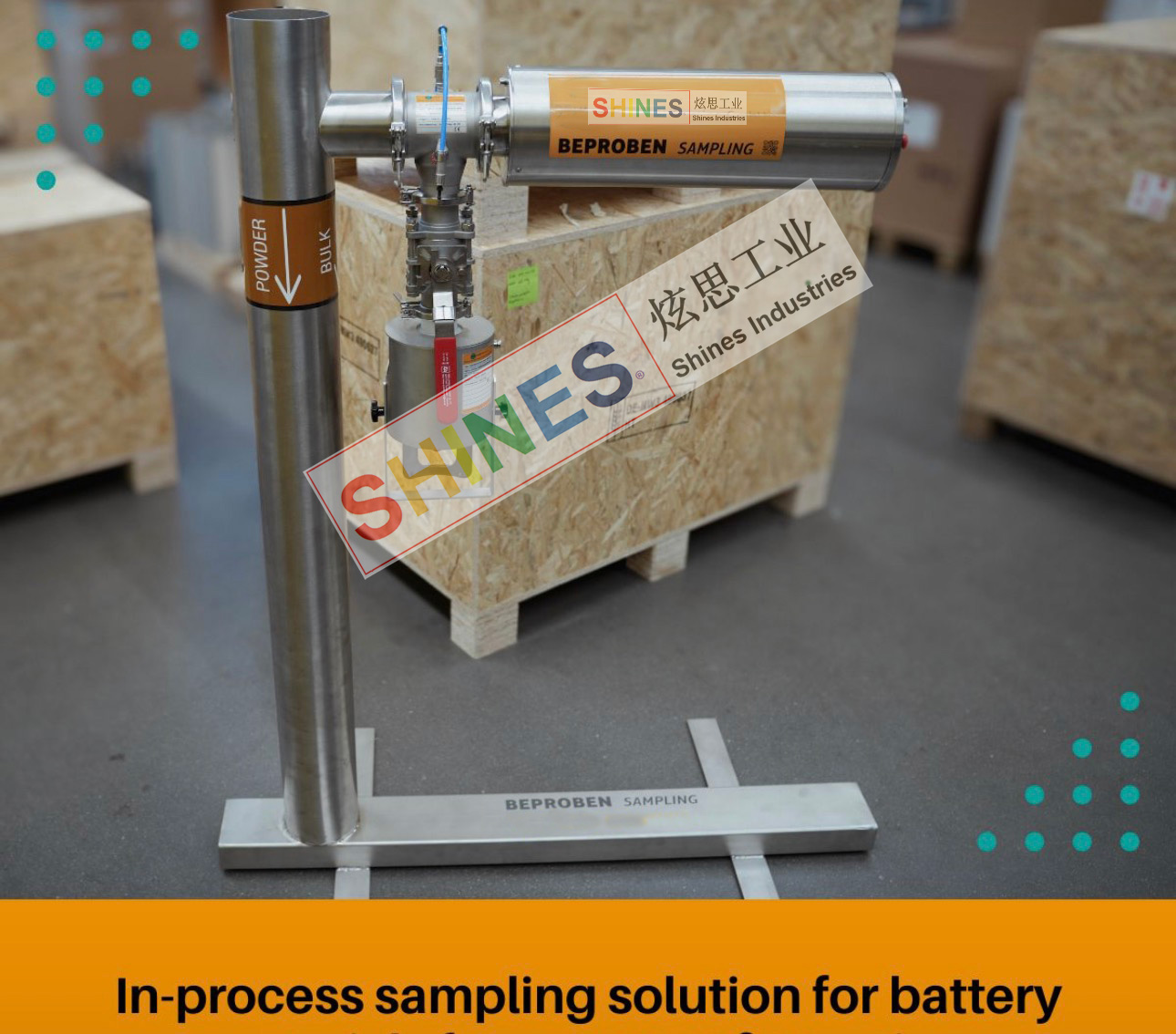
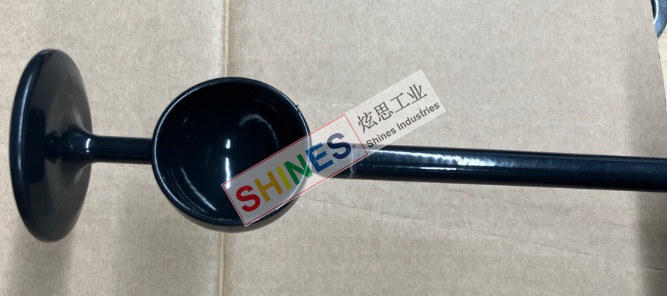
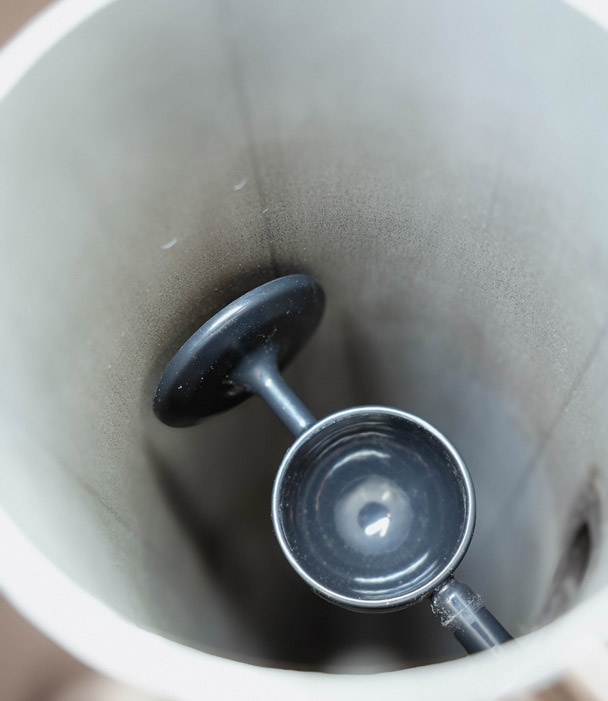
Representative Sampling from Continuous Material Flows In many areas of battery manufacturing, powders are transported continuously. Here, sampling directly from the drop pipe has become established. Specially designed cup samplers take defined sample volumes directly from the free-falling material stream. The major advantage: sampling is reproducible and does not interfere with ongoing production. By selecting different pipe diameters and variable cup geometries, the sample quantity can be precisely tailored to subsequent analytical requirements—an essential factor for reliable quality data. Sampling from Reactors and Buffer Tanks This type of sampling provides valuable information on material homogeneity and the progress of chemical reactions. Thanks to compact design and modular construction, such systems can be integrated flexibly and serviced easily—an important contribution to plant availability. Automation as a Key to Process Reliability Today’s sampling solutions are fully integrated into plant and process control. Automated sequences, decentralized controls, and integrated sensors ensure consistently high sample quality and minimize manual intervention. Direct connection to the control system enables seamless documentation, supports traceability, and forms the basis for data-driven process optimization—a clear advantage in highly regulated production environments. Sampling Determines Quality and Competitiveness In battery manufacturing, sampling is far more than an auxiliary analytical step. It is a central element of process management and a decisive lever for quality, safety, and efficiency. Those who rely on automated, contamination-free, application-optimized sampling solutions create the foundation for stable processes and high-quality battery materials—today and in the future. |
|
- Copyright © 2016-
- Shines (Shanghai) Industrial Equipment Co., Ltd